Food. Movement. Gardens. Land. Explore the American crop atlas ↗

01 / Food

Food for
growing lives.

From a child’s first meals to the strength we build over time, growing starts at the table. Explore the food story, then follow it into movement, gardens, and land.

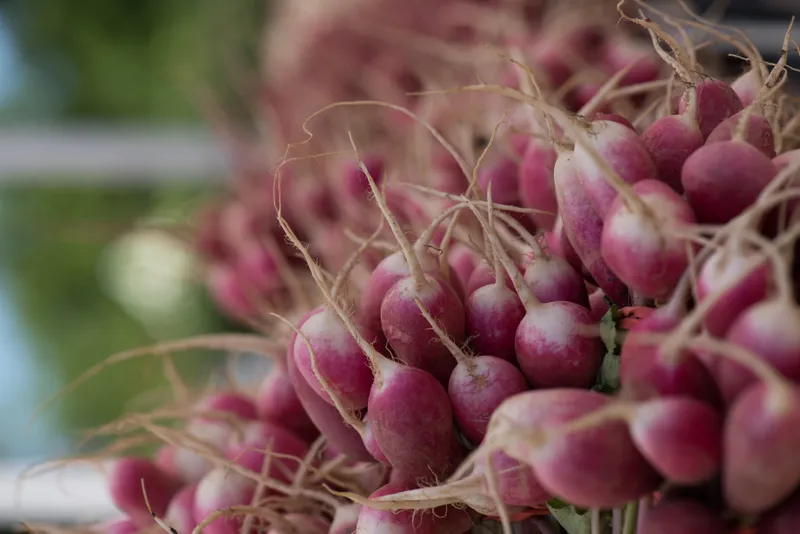
Pink and white radishes with fine roots at a farmers market.
Radishes at the USDA Farmers Market, Washington, D.C.USDA / Lance Cheung · public domain ↗

01 / Heart & table

Good food.
A steady habit.

A heart-healthy pattern is built across meals, not around a single “superfood.” The NIH’s DASH eating plan combines vegetables, fruit, whole grains, beans, nuts, fish, and lower-fat dairy while limiting sodium and saturated fat.

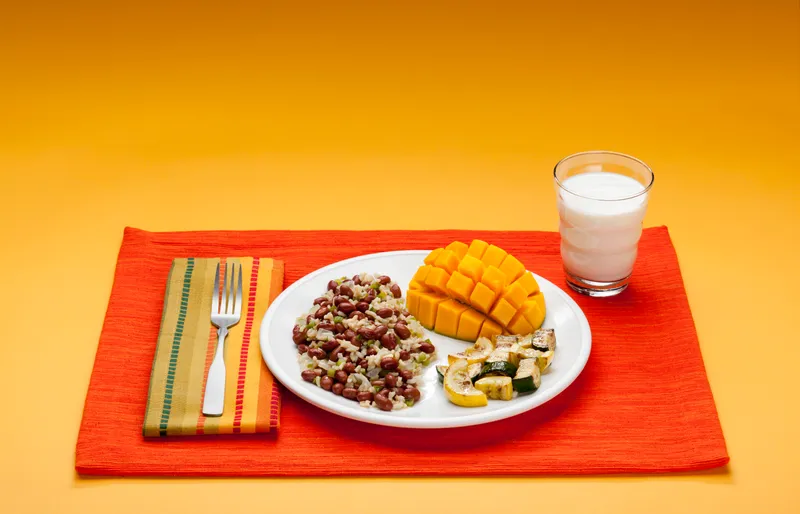
A plate with brown rice, beans, squash, and mango beside a glass of milk.
A USDA meal example with rice, beans, vegetables, fruit, and milk. USDA / Food and Nutrition Service · public domain ↗

Make room for

  • Plants with staying power. Oats, brown rice, beans, vegetables, and fruit can anchor everyday meals.
  • A different kind of fat. Use an unsaturated vegetable oil, such as olive oil, in place of butter when it suits the dish.
  • Less sodium, still plenty of flavor. Compare labels on soups, sauces, and canned foods. Try herbs, spices, or lemon instead of reaching straight for salt.
Why this matters: DASH can help lower blood pressure.NIH / DASH eating plan ↗

02 / Gut & fiber

Give fiber
a regular place.

Fiber and enough fluid help stools stay easier to pass. Whole grains, beans, fruits, vegetables, and nuts offer ways to bring fiber into meals. Add it gradually so your body has time to adjust.

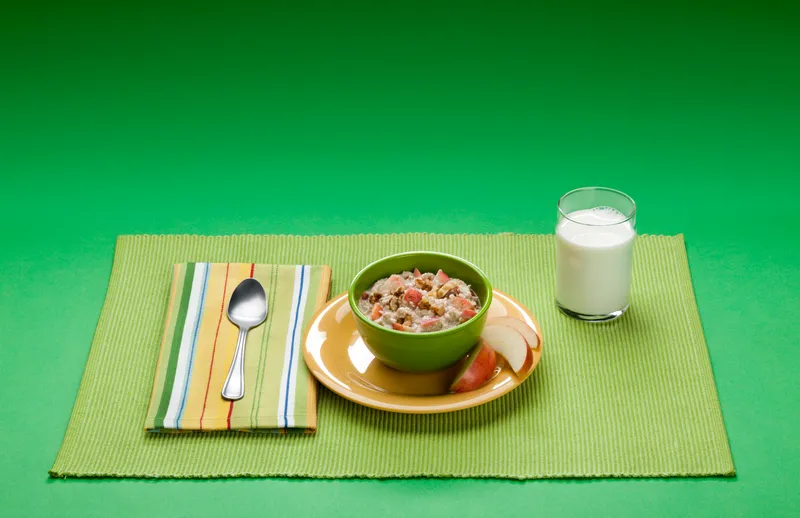
A bowl of oatmeal with chopped apple and walnuts, apple slices, and a glass of milk.
Oatmeal, apple, and walnuts in a USDA breakfast example. USDA / Food and Nutrition Service · public domain ↗

Start with one addition

  • At breakfast. Try oatmeal with berries or a chopped pear.
  • At lunch. Stir lentils or chickpeas into soup, or use a whole-grain bread you like.
  • At dinner. Add peas, broccoli, or collard greens alongside a familiar main dish.

Fluid needs differ. If your care team has given you a fluid limit, follow that guidance rather than simply drinking more.

Fiber, food examples, and hydrationNIH / Eating for constipation ↗

03 / Strong bones

Build strength
from the table.

Calcium helps build and maintain bones. Vitamin D helps the body absorb it. Needs change with age, so a child, a teenager, and an older adult may need different amounts.

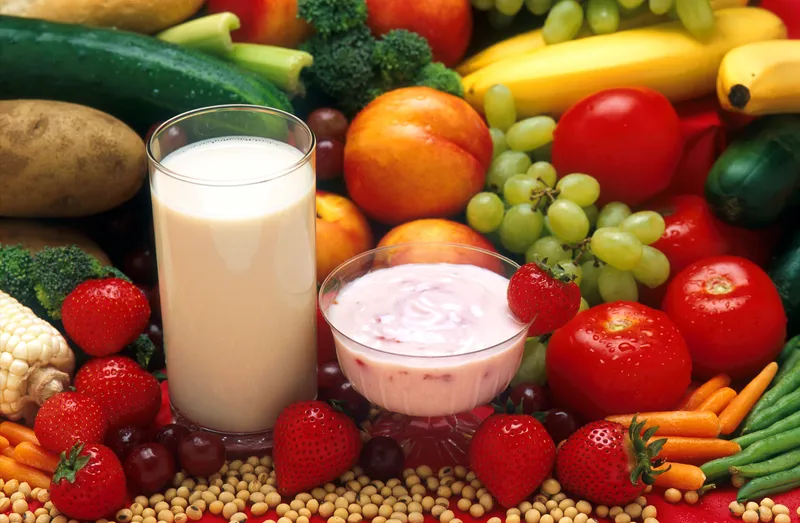
Milk and a bowl of yogurt surrounded by fruit and vegetables.
Milk and yogurt among everyday foods; calcium content varies by product. USDA ARS / Peggy Greb · public domain ↗

Know your calcium sources

  • Dairy options. Milk and yogurt provide calcium.
  • Beyond dairy. Calcium-fortified soy beverages and some tofu can contribute; check the label because products differ.
  • Other foods count. Canned salmon or sardines with edible bones, kale, broccoli, and bok choy also provide calcium.

Supplements are not automatically better. Calcium supplements can interact with medicines; ask a clinician or pharmacist before adding one.

Calcium, vitamin D, foods, and supplement cautionsNIH / Calcium fact sheet ↗

04 / Growing muscles

Food for growth.
Room to move.

Your body uses protein to make and repair cells. It matters for growth and development as well as everyday maintenance. Both plant and animal foods can supply it.

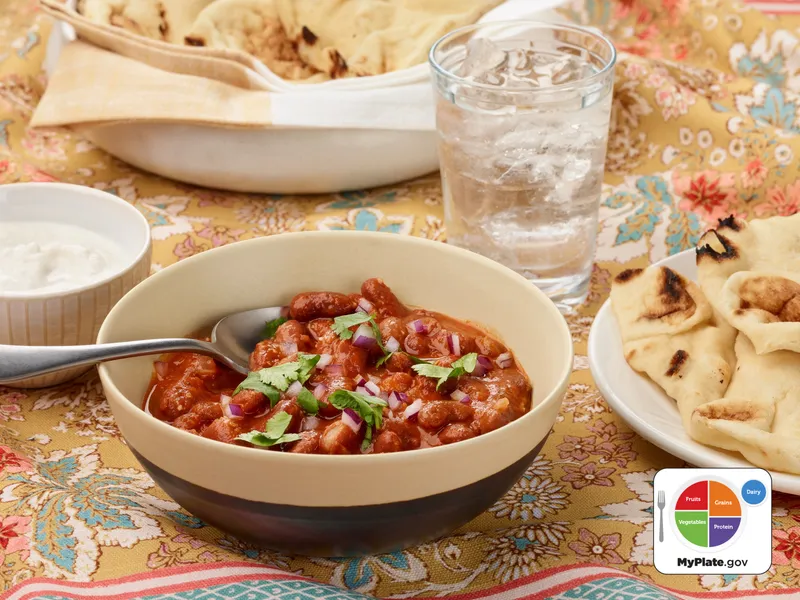
A bowl of Afghan kidney bean curry with flatbread and a glass of water.
Afghan kidney bean curry in a USDA cultural-food collection. USDA / Food and Nutrition Service · public domain ↗

More than one way to get protein

  • From plants. Beans, lentils, tofu, tempeh, nuts, and seeds offer different flavors and textures.
  • From animal foods. Eggs, fish, poultry, lean meat, and dairy are other options.
  • Across the day. A varied eating pattern matters more than making every meal identical. Protein needs depend on the person.

With kidney disease, protein goals may change. Use your care team’s plan rather than a generic high-protein target.

05 / Healthy kids

A place at
the family table.

Make food something children can explore: different colors, textures, and familiar meals with small changes. Invite them into planning and preparation, and eat together when you can.

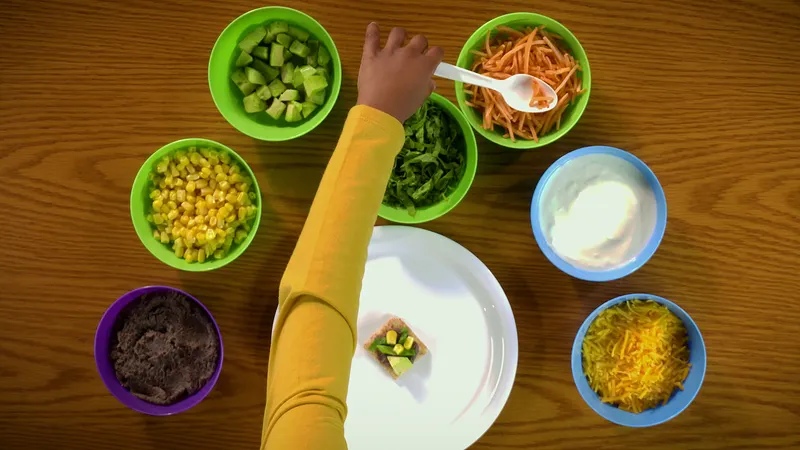
A child's hand assembling a small vegetable snack from bowls on a table.
Hands-on food preparation in a USDA Team Nutrition activity. USDA / Team Nutrition · public domain ↗

Build habits together

  • Offer variety. Include fruits, vegetables, grains, protein foods, and dairy or appropriate fortified alternatives over the day.
  • Give them a job. Rinsing produce, stirring a cool mixture, or choosing a vegetable can make them part of the meal.
  • Make trying low-pressure. Offer a new food alongside familiar ones. Avoid turning a meal into a contest over cleaning the plate.

Match food size and texture to a child’s abilities. Whole nuts, whole grapes, and hard raw pieces can be choking hazards for young children. Infants need age-specific feeding guidance.

06 / Kidney-aware

One person.
A personal plan.

Kidneys help balance fluids and minerals. With chronic kidney disease, food needs depend on lab results, disease stage, and treatment. There is no universal list of foods that everyone with kidney disease must avoid.

What may need attention

  • Sodium and fluid. Your team may set limits to help manage blood pressure and fluid buildup.
  • Potassium and phosphorus. Ask whether you need to adjust either; restrictions are not the same for everyone.
  • Protein. Needs can differ before and during dialysis. Do not cut out protein or load up on it without guidance.
Nutrition with chronic kidney diseaseNIH / Kidney nutrition guide ↗

A skill for every aisle

Turn the
package around.

A Nutrition Facts label helps you compare foods. Start with the serving size: the amounts on the label apply to that serving, which may not be the amount you eat.

01 /

Compare like with like.

Check serving sizes before comparing two products. Two servings mean twice the listed nutrient amounts.

02 /

Read the percentage.

As a general label guide, 5% Daily Value or less is low; 20% or more is high. Daily Values are reference amounts, not a personalized prescription.

03 /

Choose with purpose.

Look for more fiber, calcium, or vitamin D when that fits your needs, and compare sodium, saturated fat, and added sugars. Your medical plan may change what you look for.

Serving sizes and % Daily ValueFDA / How to read the label ↗

Sources checked September 27, 2026. Meal combinations are Grow America examples, not individualized meal plans. Adjust for allergies and your care team’s guidance.

Bring it to the table

Make the next meal
a little more curious.

  1. Pick a food you enjoy.

    Find its growing place on the label or ask the person who sells it. What can you learn about the farm behind the food?

  2. Make something together.

    Choose a familiar meal and invite someone to help with an age-appropriate task. Talk about the ingredients as you go.

  3. Follow one ingredient.

    Try the crop atlas to explore a field crop, or the garden guide to find something you might grow.